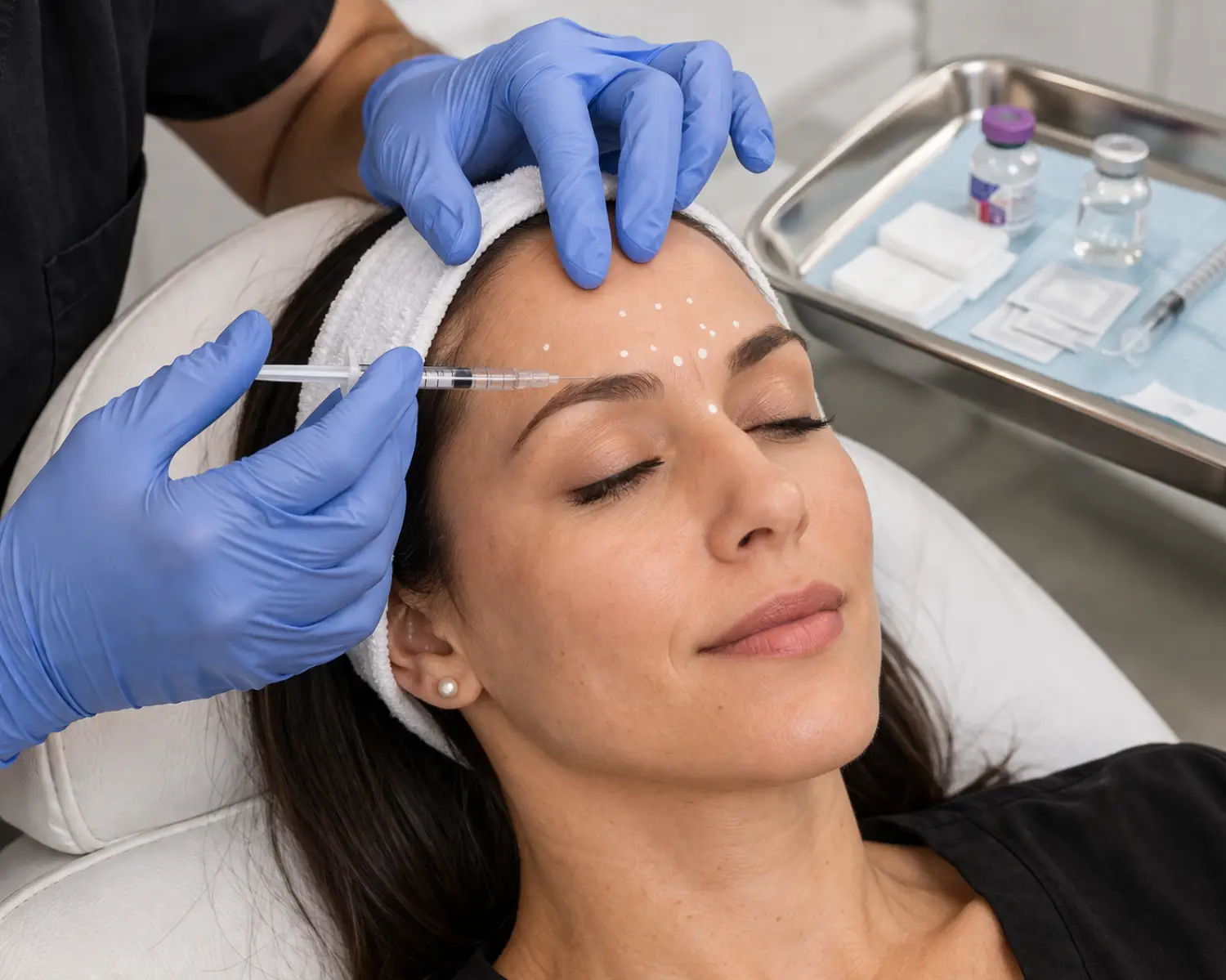
Botox injection training is open to licensed medical professionals, including registered nurses, nurse practitioners, physician assistants, physicians, and dentists. A quality Botox training program combines didactic education, facial anatomy study, hands-on injection practice, patient consultation skills, and complication management into a single structured curriculum. Hands-on injection practice on live models is the single most important component of Botox training because technique cannot be learned from a textbook alone.
At Luxe House Aesthetics in Port Washington and Bay Shore, Long Island, providers train 1-to-1 inside an operating aesthetic practice with live models and direct expert mentorship.
Who Qualifies for Botox Injection Training
Botox injection training is open to licensed medical professionals, including registered nurses (RNs), nurse practitioners (NPs), physician assistants (PAs), physicians (MDs and DOs), and dentists (DDS and DMD). No prior aesthetic experience is required to enroll in a foundational course, but an active medical license is mandatory.
State scope-of-practice laws determine who can inject independently and who requires supervision. Nurse practitioners in many states hold independent practice authority for injectables. Registered nurses typically require a collaborative or supervisory agreement with a physician or nurse practitioner to administer Botox treatments.
Verifying state-specific regulatory requirements before enrolling in any Botox certification course is a critical first step. Botulinum toxin injection is the most performed non-surgical cosmetic procedure in the United States, which continues to drive demand for trained, qualified injectors across all practice settings.
What a Quality Botox Training Program Covers
A quality Botox training program balances five core pillars rather than overemphasizing theory at the expense of clinical practice. Certification alone does not equal competency.
Didactic Education Theory-based instruction covers botulinum toxin pharmacology, FDA-approved neurotoxin types, indications, contraindications, and patient screening criteria.
Facial Anatomy. In-depth study of the muscles, nerves, and vascular structures of the face forms the backbone of safe injection. Understanding where the frontalis, corrugator supercilii, procerus, and orbicularis oculi sit determines injection placement, depth, and dosing for each treatment area.
Hands-On Injection Practice Supervised injection on live volunteer models is where clinical skill develops. Trainees practice needle placement, injection angle, appropriate depth, and unit dosing under direct expert guidance with real-time feedback.
Patient Consultation Skills Assessment techniques for evaluating facial movement patterns, identifying asymmetries, and building an individualized treatment plan before any injection takes place.
Complication Recognition and Management Protocols for identifying and responding to adverse events, including bruising, ptosis (eyelid drooping), asymmetry, and the rare but serious risk of vascular occlusion.
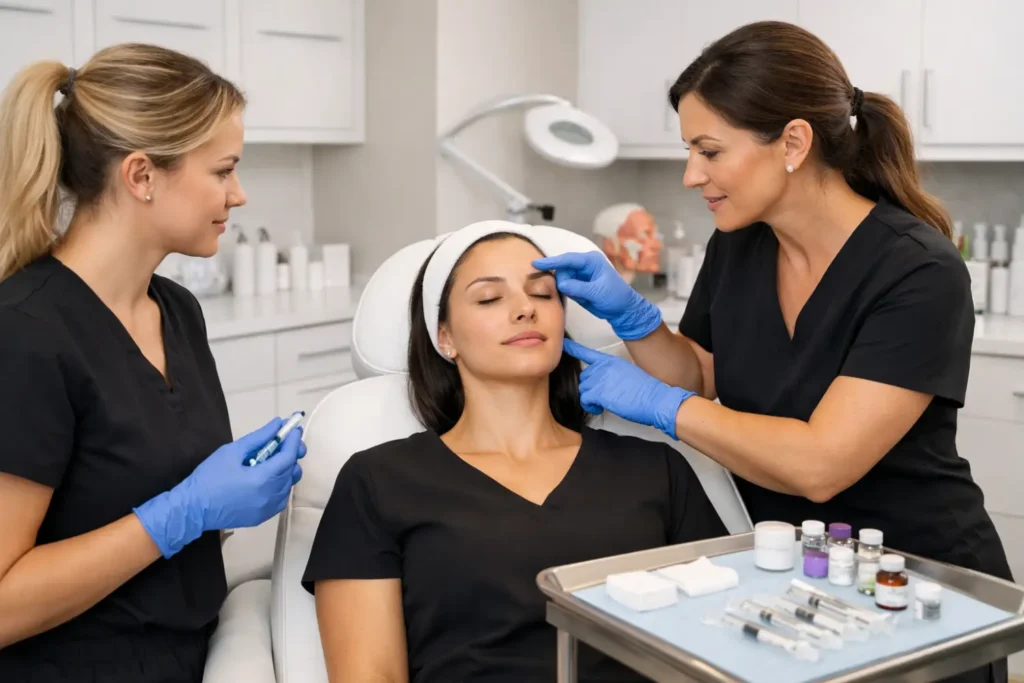
Why Hands-On Practice With Live Models Separates Good Training From Great Training
Hands-on injection practice on live models is the single most important component of Botox training because injection technique cannot be learned from a textbook, video, or mannequin alone. Real tissue responds differently from any simulation. A trainee must feel needle resistance at varying depths, observe muscle response to botulinum toxin placement, and adjust technique in real time.
The instructor-to-student ratio directly affects training quality. Large classes in hotel conference rooms leave little opportunity for individualized technique correction. A 1-to-1 or small-group mentorship model allows the instructor to observe every injection, correct errors immediately, and guide decision-making at each step.
Training inside a real clinical setting exposes the trainee to actual patient flow, consultation documentation, and post-treatment protocols. This clinical immersion builds confidence that transfers directly to independent practice.
Luxe House Aesthetics trains providers 1-to-1 inside its operating aesthetic practice with up to five live models per session. Trainees inject across multiple treatment areas under direct mentorship, gaining exposure to real clinical workflows.
Explore the full aesthetic training programs at Luxe House Aesthetics to learn more about this model.
How Facial Anatomy Knowledge Shapes Safe Injection Outcomes
Facial anatomy is the foundation of every safe and effective Botox injection. Knowing what lies beneath the skin at each injection site determines whether the treatment produces a natural result or an adverse event.
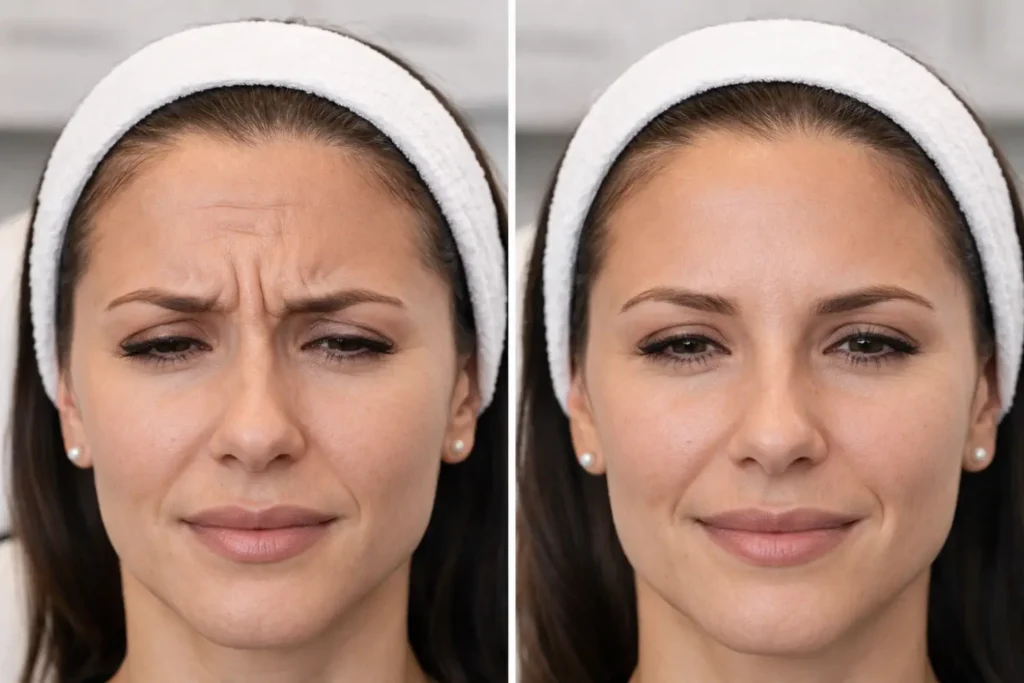
Key muscle groups every Botox injector must master include the frontalis (forehead lines), the corrugator supercilii and procerus (glabellar complex, commonly called the 11 lines), the orbicularis oculi (crow’s feet), and the masseter (jaw slimming and bruxism relief). Each muscle sits at a specific depth, and injecting too superficially or too deeply alters the effect and raises the risk.
Vascular awareness is equally critical. Understanding the facial arterial supply prevents the rare but serious risk of intravascular injection. Motor nerve pathways must also be mapped mentally before every treatment. Incorrect placement near the temporal branch of the facial nerve, for example, can cause unintended brow ptosis. Anatomy knowledge is what separates a trained injector who reads each face individually from someone who memorizes fixed injection points.
What to Look for in a Quality Botox Training Program
The single most important factor in Botox training quality is how much supervised, hands-on practice the program includes. Programs vary significantly in structure, and those differences directly affect how confident and prepared a new injector feels on day one.
What to look for in a quality program:
- Hands-on injection practice on live volunteer models, not mannequins only
- Low instructor-to-student ratio (1-to-1 or small group)
- Instructors who actively practice aesthetics in a clinical setting
- Training is conducted in a real clinical environment rather than a hotel or convention hall
- Post-course mentorship or follow-up support for new injectors
Luxe House Aesthetics meets every one of these quality markers: 1-to-1 training format, practicing injectors as instructors, real clinical environment, and live models included in every session, creating a training experience that reflects real patient care rather than a classroom simulation.
How Botox Training Connects to a Broader Aesthetic Career
Botox injection training is often the entry point into aesthetic medicine for nurses, nurse practitioners, and physician assistants. Most injectors expand their skill set into dermal fillers after mastering neurotoxin fundamentals, adding volume restoration and facial contouring to their clinical capabilities.
The combination of neurotoxin and filler expertise positions a provider to offer full-face rejuvenation rather than isolated treatments. Ongoing education and supervised practice beyond initial certification build the long-term clinical judgment that distinguishes skilled aesthetic injectors.
See how trained injectors apply these techniques in practice through Botox and neurotoxin treatments at Luxe House Aesthetics.
Explore Aesthetic Training at Luxe House Aesthetics
Luxe House Aesthetics offers 1-to-1 Botox and dermal filler training for licensed medical professionals at its Port Washington and Bay Shore, Long Island locations.
Call 631-505-1036 or book your appointment online to discuss beginner and hands-on training options with the Luxe House team.
Frequently Asked Questions About Botox Training
Do I need prior aesthetic experience to start Botox training?
No. Beginner-level Botox training programs accept licensed medical professionals with no prior injectable experience. An active medical license (RN, NP, PA, MD, DO, or DDS) is the primary enrollment requirement.
How long does a Botox certification course take?
Most foundational Botox training programs run one full day, combining didactic instruction with hands-on injection practice on live models. CME-accredited programs award continuing education credits upon completion. Advanced courses build on this foundation with additional technique refinement across more treatment areas.
Can I start injecting immediately after certification?
Certification confirms training completion, but the ability to practice independently depends on state scope-of-practice laws and any required supervisory agreements. Many new injectors begin treating patients within days of completing a quality hands-on program.
What is the difference between beginner and advanced Botox training?
Beginner courses cover foundational facial anatomy, core injection sites (forehead, glabella, crow’s feet), and safety protocols. Advanced courses introduce off-label applications such as masseter reduction, lip flip, platysmal bands, and gummy smile correction.